

Introduction
Choosing the best cushion foam for sofa seats can completely change how comfortable your sofa feels. Whether your sofa is new or old, the foam inside determines how soft, supportive, and durable the seat will be. Bad foam can leave you with back pain, sagging seating, or discomfort during long hours of sitting. On the other hand, the right foam makes your sofa relaxing, cozy, and long-lasting.
Many people don’t realize that foam quality matters just as much as fabric style or color. Foam affects comfort, posture support, and even how your sofa looks over time. With so many options available — from high-density foam to memory foam and layered designs — choosing the right one can be confusing.
In this guide, you will learn what types of foam are best for sofa seats, how to choose foam based on usage and body weight, common mistakes to avoid, benefits of each type, and expert tips to get the most from your sofa cushions. By the end, you’ll feel confident selecting the best cushion foam for sofa seats that fits your comfort and budget needs.
What Is Cushion Foam for Sofa Seats?
Cushion foam for sofa seats is the inner padding material that gives shape and comfort to your sofa. It is the soft layer you sit on, which supports your body and keeps your posture correct.
Foam comes in different types and densities. The most common foam types used in sofa seats include:
- High-density polyurethane foam
- Memory foam
- Latex foam
- Layered foam combinations
Each type has its own feel, support level, and comfort advantages. Understanding these differences helps you choose the best cushion foam for sofa seats that matches how you sit and relax.
Why Is Choosing the Best Cushion Foam Important?
The foam inside your sofa directly affects:
- Comfort level when sitting
- Body support, especially for back and hips
- Foam durability and long-term shape
- How the sofa feels over time
- Overall value for money
Choosing the wrong foam can lead to:
- Sagging cushions
- Frequent reshaping
- Body fatigue or discomfort
- A sofa that feels cheap or worn quickly
With the right foam, your sofa will stay comfortable even after years of use, and you will enjoy better seating without pain or sagging.
Step-by-Step Guide to Choosing the Best Cushion Foam
Step 1: Think About How You Use the Sofa
Start by asking yourself:
- Do you use the sofa every day?
- Do guests sit on it often?
- Do children or heavy family members use it?
For everyday use, you need firmer, more durable foam. For occasional or light use, softer foam may be acceptable.
Step 2: Match Foam Density With Comfort Needs
Foam density tells you how heavy and supportive the foam is:
- Low density (1.2–1.7 lb): Softer feel, less durability
- Medium density (1.8–2.2 lb): Balanced comfort and longevity
- High density (2.3 lb and above): Best support and long life
For most sofas, especially daily use seating, high density foam is recommended. It keeps shape longer and supports your body better.
Step 3: Choose the Right Foam Type
Here’s how the most common options compare:
High-Density Polyurethane Foam
- Firm and supportive
- Most common choice for sofa seats
- Strong durability and shape retention
This is a great choice for living room sofas that are used every day.
Memory Foam
- Soft, body-contouring feel
- Excellent pressure relief
- Not as springy as regular foam
Memory foam adds comfort, but you might want it in layers rather than alone, since it can become too soft for some users.
Latex Foam
- Natural, resilient feel
- Cooler than memory foam
- Durable and supportive
Latex is ideal if you want a balance of support and comfort without sinking too deeply.
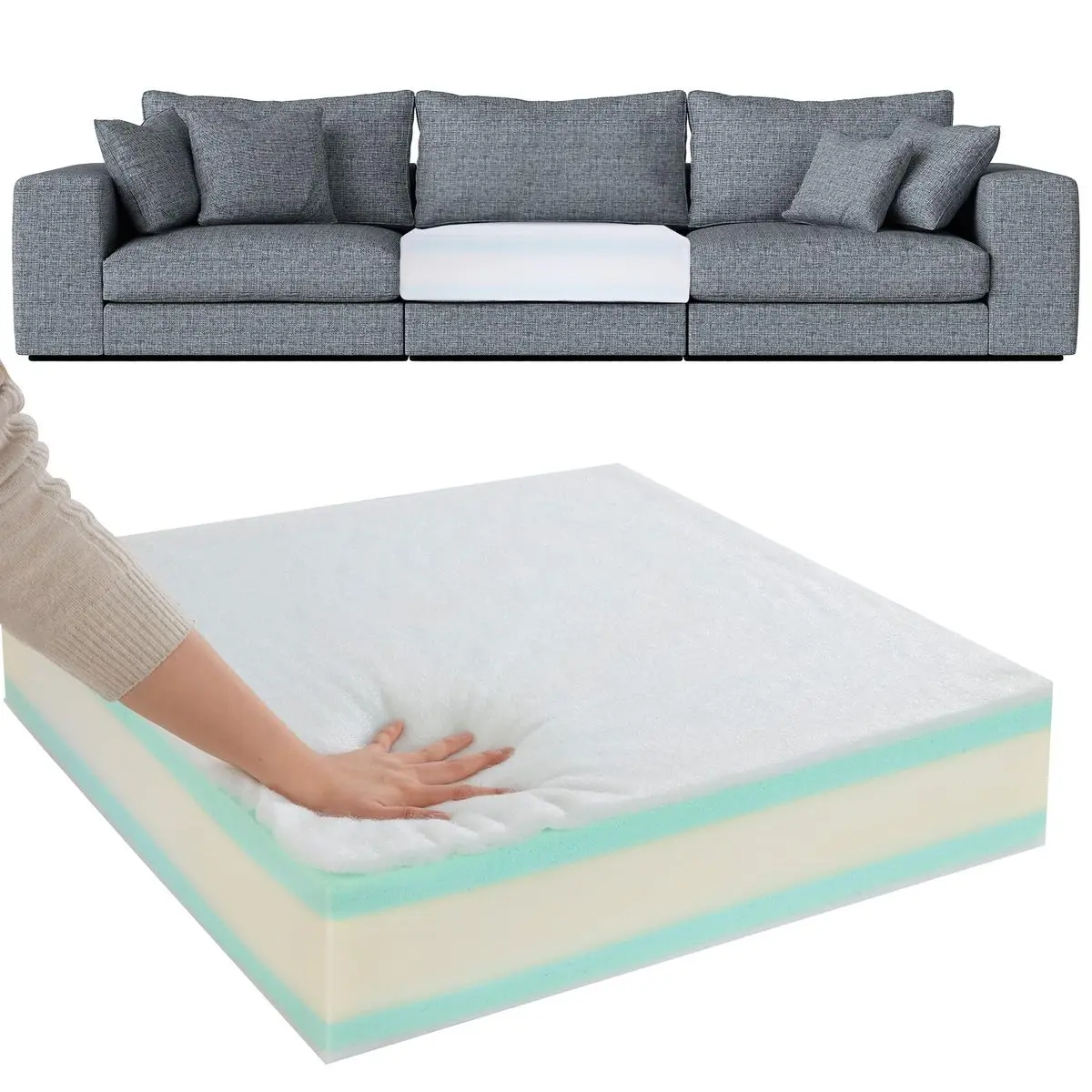
Layered Foam Combinations
Many sofas use a mix of foam types, such as high-density base foam plus a memory foam or latex top layer. This offers both support and plush comfort.
Step 4: Select Firmness Level
Foam firmness affects how the sofa feels:
- Soft: Gentle feel, good for lounging
- Medium: Balanced support and comfort
- Firm: Best support, keeps shape longer
If you sit upright often, medium or firm foam works best. If you like to lounge and relax deeply, a medium to soft cushion may feel better.
Step 5: Consider Your Body Weight
Your weight affects how foam responds:
- Lightweight users: Softer foam feels comfortable
- Medium weight: Medium foam provides balance
- Heavyweight users: Medium-firm or firm high-density foam is best for support
Matching foam firmness to body weight helps avoid sagging and discomfort.
Step 6: Test and Try Foam Before Finalizing
If possible, visit a showroom to sit on different foam cushions. Sit for a few minutes and pay attention to:
- How your body feels after sitting
- Whether your lower back feels supported
- How easily you sink into the foam
Also ask about trial or return options if buying custom foam replacements.
Benefits of the Best Cushion Foam for Sofa Seats
- Better comfort and posture support
- Lasts longer without sagging
- Reduces back or hip pressure
- Improves overall seating experience
- Looks fresh and firm over time
- Customizable feel based on preference
High-quality foam can make a big difference in how comfortable your sofa feels every day.
Disadvantages / Risks
- High-density foam costs more
- Very soft foam can lose shape faster
- Memory foam alone may feel too soft for daily use
- Cheap foam can wear out quickly
- Foam quality affects longevity
Understanding these risks helps you choose a foam that matches both comfort and durability needs.
Common Mistakes to Avoid
- Choosing foam only based on price
- Ignoring foam density and quality
- Assuming softer foam always means better comfort
- Not considering how the sofa will be used
- Forgetting to test foam before buying
Avoiding these mistakes improves your chances of picking the right cushion foam.
FAQs
1. What density foam is best for sofa seats?
High-density foam (2.3 lb and above) is usually the best choice for everyday sofas.
2. Is memory foam good for sofa cushions?
Yes, especially in combination with high-density foam for added comfort without loss of support.
3. How thick should sofa seat foam be?
Foam thickness of 4–6 inches offers good comfort and support for most sofas.
4. Can I replace old foam in my sofa?
Yes. Replacing old foam with high-density options can make an old sofa feel new again.
5. Does foam affect body posture?
Yes. Supportive foam helps your spine align naturally and reduces pressure on your lower back.
6. How long does sofa foam last?
Good quality cushion foam can last 5–10 years depending on usage and care.
Expert Tips & Bonus Advice
- Use a foam topper on top of base foam for extra softness without losing support.
- Rotate cushions regularly to prevent uneven wear.
- Pair foam with high-quality upholstery fabric and springs for best comfort.
- Avoid cheap foam — it wears out quickly and loses shape.
- Consult a professional if you want custom foam shapes for your sofa.
Conclusion
Choosing the best cushion foam for sofa seats is one of the most important decisions you can make to improve your seating comfort. Foam affects how your body feels, how your posture stays aligned, and how long your sofa looks good.
High-density foam remains the most reliable choice for daily sofas, offering support, resilience, and long-lasting comfort. Memory foam and latex add softness and pressure relief when used as part of a layered design. Understanding your sitting habits, body weight, and comfort preferences will help you find the perfect foam type and firmness.
By avoiding common mistakes and following expert tips, you can choose cushion foam that makes your sofa feel more comfortable, supportive, and enjoyable — whether you watch TV, read, relax, or entertain guests. A good foam cushion makes every moment on your sofa better.
